

 简体中文
简体中文
Fra løsninger til produksjoner, vi er spesialiserte på å lage produktene du trenger.
Hjem / Nyheter / Bransjenyheter / Are All HEPA Filters the Same — or Are You Buying False Protection?

Walk into any appliance store or browse any air purifier listing online, and you will encounter the word "HEPA" applied to products that perform very differently from one another. Some filters genuinely capture 99.97% of airborne particles at 0.3 microns. Others use the same label to describe filtration that captures far less, offers no independent verification, and would fail to meet the standard its marketing implies. The gap between a true certified HEPA filter and one that merely claims the name is not a matter of fine print — it is a matter of whether the filter actually protects the air you breathe. Understanding how HEPA filters are classified, tested, and certified is the only reliable way to avoid being misled.
HEPA stands for High Efficiency Particulate Air. The term was originally developed by the U.S. Atomic Energy Commission during the 1940s to describe filters used in nuclear research facilities to capture radioactive particles. The standard that emerged from that work defined a HEPA filter as one capable of removing at least 99.97% of particles that are 0.3 microns in diameter from the air passing through it. The 0.3-micron particle size is used as the benchmark because it represents the most penetrating particle size — the hardest size for a filter to capture due to the balance between inertial impaction, interception, and diffusion mechanisms.
This definition is precise and testable. A filter either meets it or it does not. The problem is that "HEPA" is not a legally protected term in most consumer markets. Any manufacturer can print it on packaging without being required to demonstrate that their filter meets the efficiency threshold. This is the fundamental reason why two products with identical labeling can perform so differently in practice.
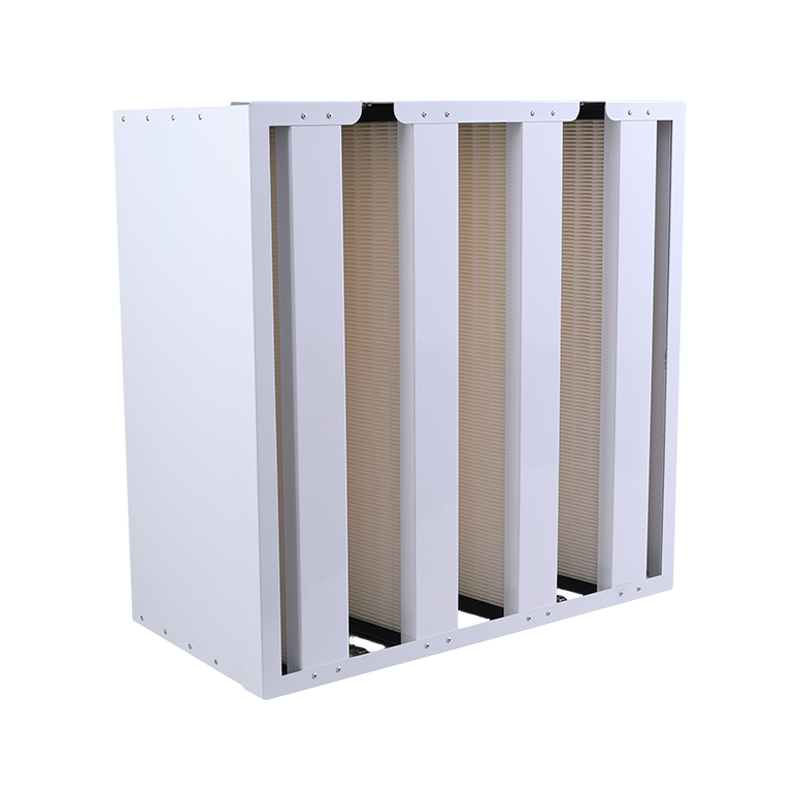
In Europe, the most widely used technical standard for high-efficiency air filters is EN 1822, which has been largely superseded and aligned with ISO 29463. This standard defines a classification system for HEPA and ULPA (Ultra Low Penetration Air) filters based on their efficiency at the most penetrating particle size (MPPS) for that specific filter medium — which may differ slightly from the fixed 0.3-micron benchmark used in the U.S. definition.
Under EN 1822 and ISO 29463, HEPA filters are divided into grades H13 and H14, while ULPA filters fall into grades U15, U16, and U17. Each grade specifies both an overall efficiency and a local efficiency — meaning the standard tests not just the average performance of the filter but also its weakest point, ensuring there are no bypass zones where particles pass through uncaptured.
| Filter Class | Overall Efficiency | Local Efficiency | Typical Application |
| H13 | ≥ 99.95% | ≥ 99.75% | Air purifiers, medical environments, cleanrooms |
| H14 | ≥ 99.995% | ≥ 99.975% | Pharmaceutical manufacturing, hospital operating theatres |
| U15 | ≥ 99.9995% | ≥ 99.9975% | Semiconductor fabrication, nuclear facilities |
| U16 | ≥ 99.99995% | ≥ 99.9990% | Advanced cleanrooms, microelectronics |
For consumer air purifiers and residential applications, H13 is the relevant benchmark. A filter certified to H13 under EN 1822 or ISO 29463 has been individually tested — not batch-sampled — and the result is documented. This is a meaningfully higher standard of quality assurance than a product that simply prints "HEPA" on its packaging.
In the United States, the Department of Energy (DOE) publishes specifications for HEPA filters used in nuclear and government applications. The DOE standard requires a minimum efficiency of 99.97% at 0.3 microns and mandates that filters be individually tested before use. This standard applies to filters procured for federal facilities and is enforced within those procurement chains — it does not govern what can be sold to consumers under the HEPA label in the retail market.
The Institute of Environmental Sciences and Technology (IEST) publishes recommended practices for HEPA filter testing in cleanroom environments. IEST-RP-CC001 is the most referenced document, covering filter construction, performance testing, and installation. Filters that meet IEST and DOE specifications are rigorously verified products, but again, compliance with these standards is not required for a consumer product to carry the HEPA name in most jurisdictions.
The terms "HEPA-type," "HEPA-style," and "HEPA-like" are marketing constructions used to imply similarity to genuine HEPA filters without meeting the efficiency standard. A HEPA-type filter might capture 85% to 95% of fine particles rather than the 99.97% required by the actual standard. For someone managing allergies, asthma, or sensitivity to fine particulate matter, the difference between 95% and 99.97% filtration is not trivial — at 95% efficiency, five times more particles pass through than at 99.97%.
These filters are not fraudulent in a legal sense in most markets, because the HEPA label is unprotected. But they are misleading to consumers who reasonably assume the word carries a consistent technical meaning. When evaluating any air purifier or vacuum cleaner that claims HEPA filtration, disregarding any qualifier — "type," "style," "grade," or "class" — attached to the word HEPA is a practical starting point. If the product claims true HEPA performance, it should state the specific efficiency percentage and the test standard used to verify it.
True HEPA filters — those meeting the 99.97% at 0.3 microns threshold or the EN 1822 H13/H14 classification — capture viruses, bacteria, fine combustion particles, pollen, mold spores, and fine dust with reliable consistency. HEPA-type filters at 85–95% efficiency capture larger particles reasonably well but allow a significant fraction of the finest and most health-relevant particles to pass through uncaptured. The particles that escape a substandard filter are precisely the ones that penetrate deepest into the respiratory tract.
A certified HEPA filter — whether certified under EN 1822, ISO 29463, or DOE specifications — comes with traceable test documentation. Industrial and commercial buyers typically receive test reports showing efficiency, pressure drop, and leak test results for each filter unit. Consumer-grade certified filters may not ship with individual reports, but the manufacturer should be able to provide third-party test data upon request. A product that cannot provide any independent test data to support its HEPA claim is a product to approach with caution.
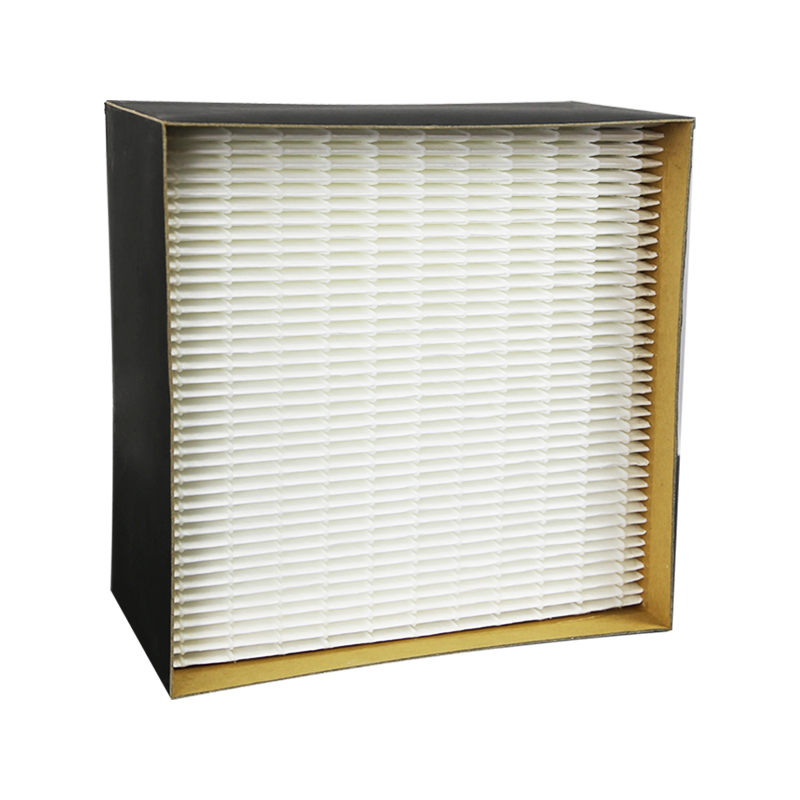
Genuine HEPA filter media is made from randomly arranged borosilicate glass microfibers, sometimes combined with synthetic fibers, formed into a dense mat and pleated to maximize surface area while maintaining structural integrity. The pleating is separated by aluminum, plastic, or hot-melt adhesive separators to maintain airflow channels. HEPA-type filters are often made from less dense synthetic fiber mats with larger average fiber diameters, which is what accounts for their lower efficiency at fine particle sizes.
Identifying a genuinely certified HEPA filter requires looking past the front-of-pack marketing and checking for specific verifiable claims. The following checklist covers the key things to look for:
For general household dust reduction, even a HEPA-type filter provides meaningful improvement over no filtration. But for people with asthma, allergies, compromised immune systems, or respiratory conditions, the distinction between 95% and 99.97% efficiency becomes clinically significant. Fine particulate matter below 2.5 microns — PM2.5 — is the particle fraction most strongly associated with cardiovascular and respiratory health impacts, and it is precisely in this size range that HEPA-type filters underperform relative to certified HEPA media.
In environments where filtration is used to control infectious aerosol transmission — hospitals, dental clinics, aged care facilities, or homes housing immunocompromised individuals — only filters certified to H13 or H14 under EN 1822 or equivalent standards provide a defensible level of protection. The additional cost of a certified filter over a HEPA-type alternative is modest relative to the performance gap. Knowing the difference, and knowing how to verify a claim before purchase, is the only reliable safeguard against paying for protection that does not exist.
Hva er middels effektive luftfiltre og er de riktige for ditt HVAC-system?
Er middels effektive luftfiltre det riktige valget for ditt HVAC-system?












Copyright 2023 Nantong Henka Environment Solutions Co.,Ltd. All Rights Reserved
 HEPA luftfiltre produsenter Tilpassede HEPA luftfiltre fabrikk
 Tel: +86-13813766750
 E-mail:
  Add: 5169, Bin'gang Ave, Binjiang Subdistrict, Haimen City, Jiangsu, Kina